
February 6, 2026
The World Bank has agreed to provide enhanced supports to speed up Nigeria’s economic reforms to attract large-scale investment and open up more job opportunities for the country’s fast-growing population.
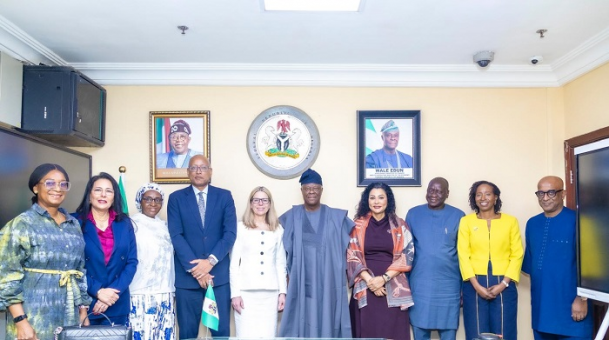
At a high-level discussions in Abuja between Minister of Finance and Coordinating Minister of the Economy, Mr. Wale Edun, and Managing Director, Operations, World Bank Group, Ms. Anna Bjerde, the World Bank said it would provide enhanced supports for ongoing initiatives to deepen Nigeria’s reform agenda to ensure more visible positive impacts on the daily lives of Nigerians.
Both sides agreed that sustained cooperation between Nigeria and the World Bank would be crucial in ensuring that reforms translate into lasting economic gains and improved living standards for citizens.
Bjerde said the World Bank would continue backing investment-driven growth strategy, with strong attention on infrastructure delivery and greater involvement of the private sector.
She said: “Our support will remain focused on helping Nigeria turn its plans into tangible outcomes, especially in infrastructure and private sector-led growth,” Ms. Bjerde said.
She expressed satisfaction with the direction of Nigeria’s economic reforms and praised the government for its clear sense of purpose.
According to her, international markets and development partners are paying closer attention to Nigeria, as confidence in the reform agenda continues to build.
She said: “The clarity of direction we are seeing is encouraging, and it is contributing to growing interest from investors and partners”.
Edun told the World Bank delegation that recent policy steps taken by the administration are beginning to yield positive momentum across key sectors of the economy.
He said the government is firmly focused on growth, investment and employment creation as central pillars of its economic strategy.
“Our priority is to create an environment where investment can flow, businesses can grow and Nigerians can find meaningful work.
“The reforms underway are designed to unlock productivity and place the economy on a more sustainable path,” Edun said.
A statement issued yesterday by the Ministry of Finance outlined that key areas discussed during the meeting, which involved officials from both sides, included improving access to stable electricity supply, boosting agricultural productivity, speeding up the rollout of digital infrastructure and making trade easier across borders.
The discussions pointed to Nigeria’s shift from making reforms to delivering real results, with both sides committed to building a stronger economy that provides jobs, stability and shared prosperity for Nigerians.
The meeting also restated the federal government’s economic path under President Bola Ahmed Tinubu, with officials noting that confidence in Nigeria’s reform programme is gaining ground among global investors and development partners.
The country expressed its ambition to deepen changes in the power and energy sectors while positioning itself as a major economic hub in West Africa.
Officials pointed to Abuja’s status as the host city of the Economic Community of West African States (ECOWAS) as part of Nigeria’s broader role in driving regional integration, trade and economic cooperation.